The Sequential American Revolution
Skip to comments
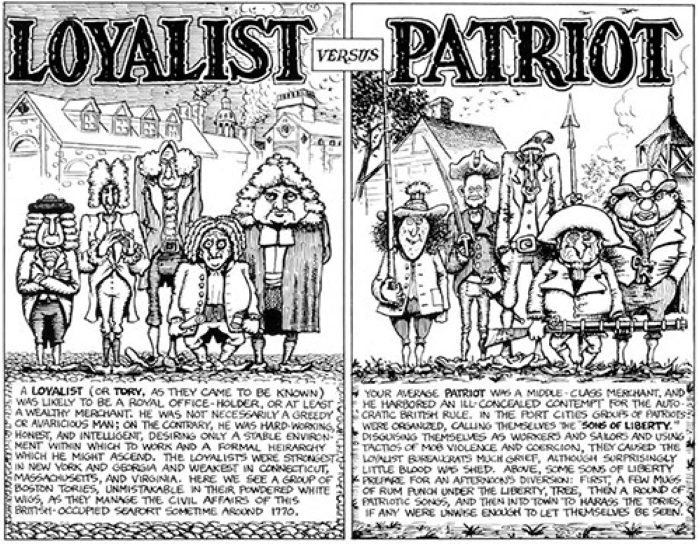
For a number of reasons the semiquincentennial of The Declaration of Independence does not seem to be celebrated as hardily as was the bicentennial fifty years ago. Not the least of which is that multiples of 100 is a bigger deal than multiples of 50.
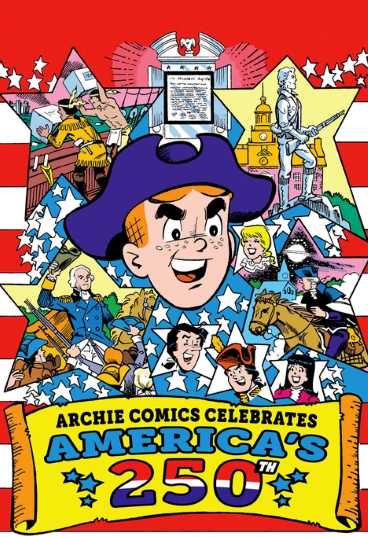
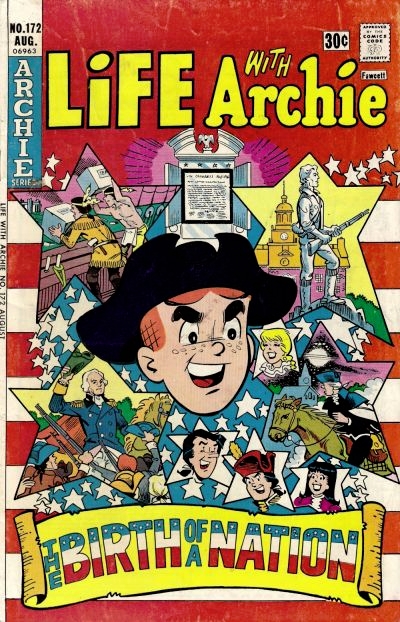
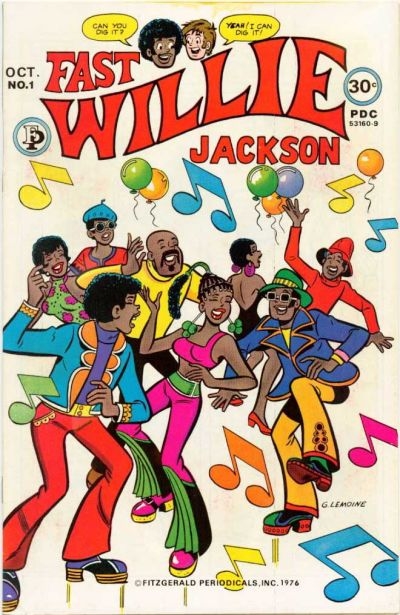
Back in the day the comic book industry was more invested in America’s birthday celebration.
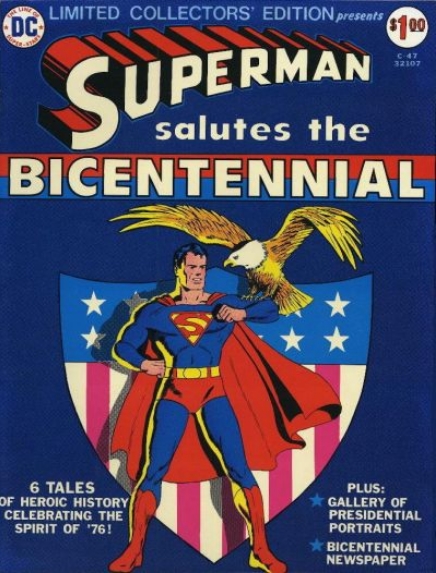
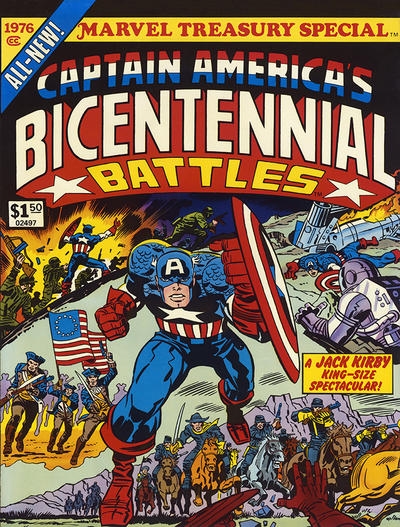
Amazingly the best bicentennial comic books were comix books.
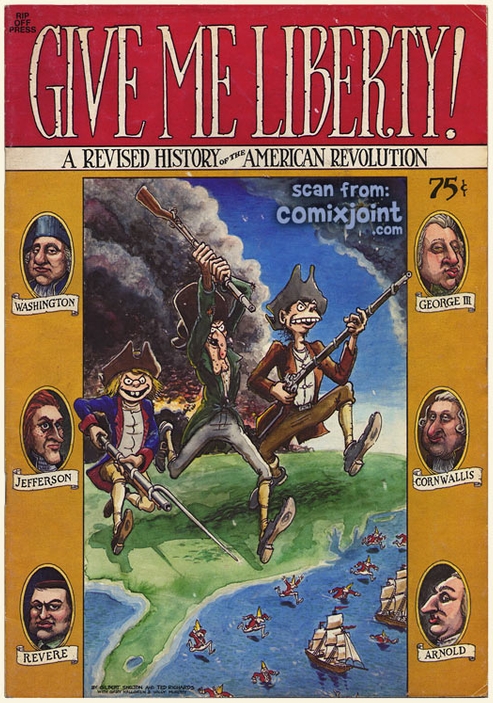
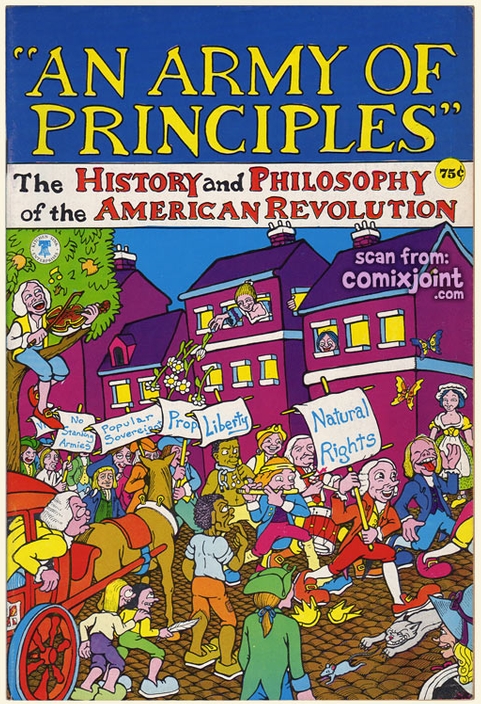
It was Give Me Liberty that changed this history buff from World War II (Shirer, Bergamini, et. al.) to The American Revolution.
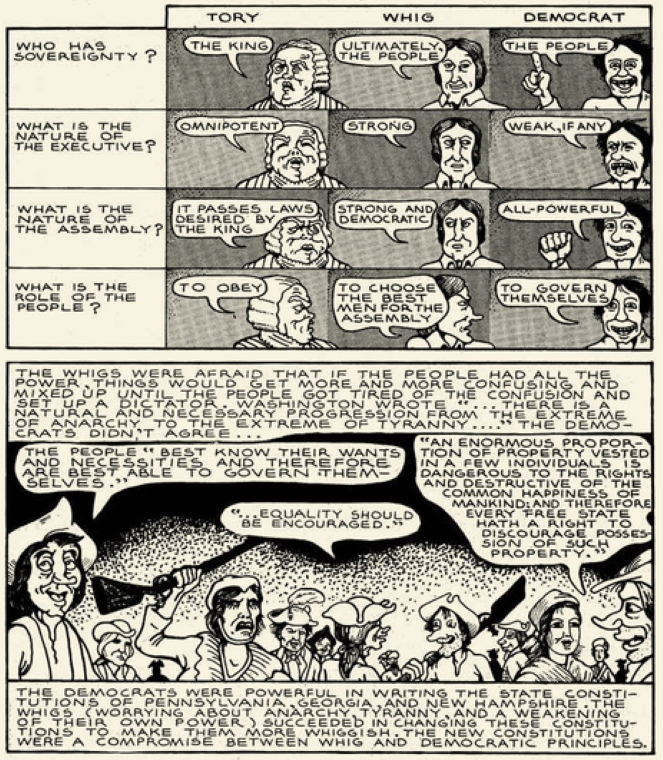
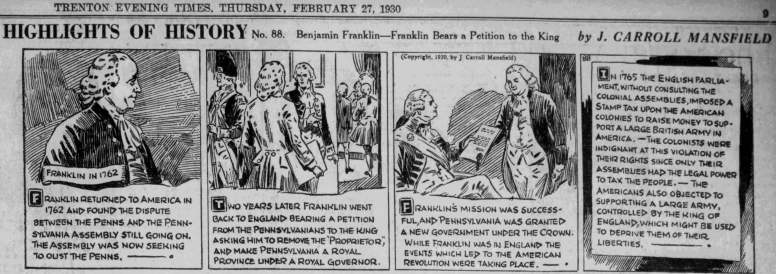
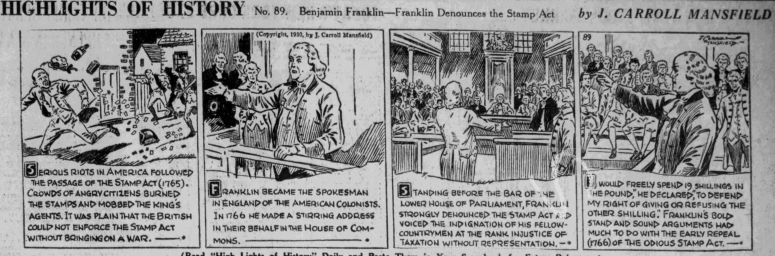
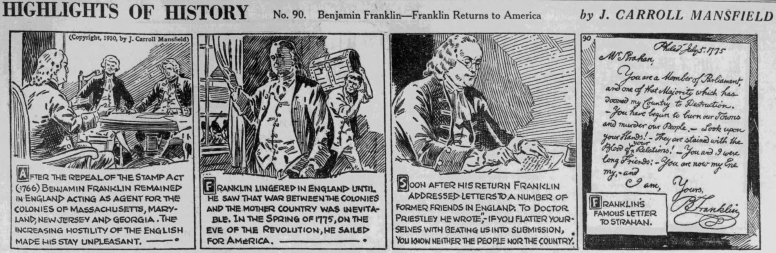
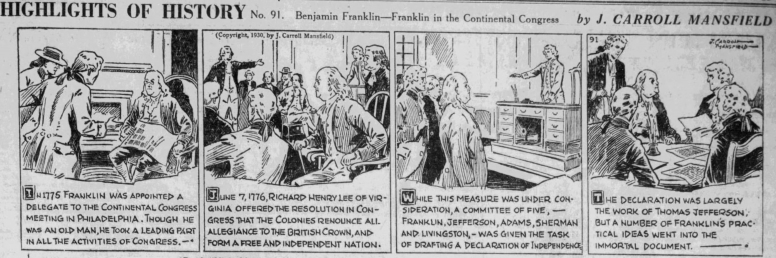
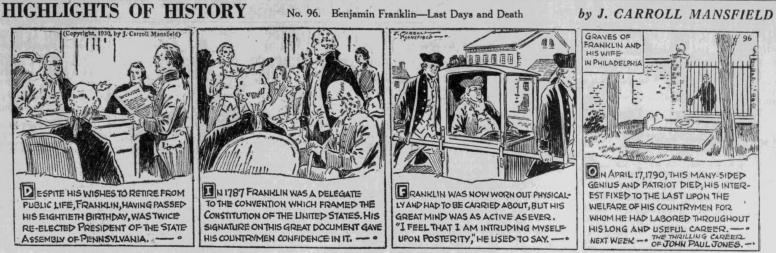
The newspaper comics pages had a few comic strips and panels that took place during The War for Independence, among them was Yankee Doodles, 200 Years Ago Today, and more (even a Steve Canyon dream episode). Of course The American Revolution was a common theme in J. Carroll Mansfield’s Highlights of History. Below is his 1930 Benjamin Franklin biography of those years.
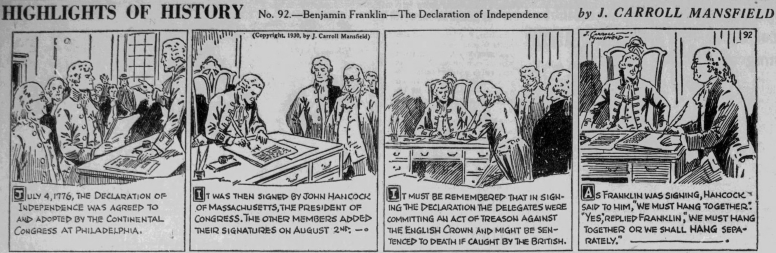
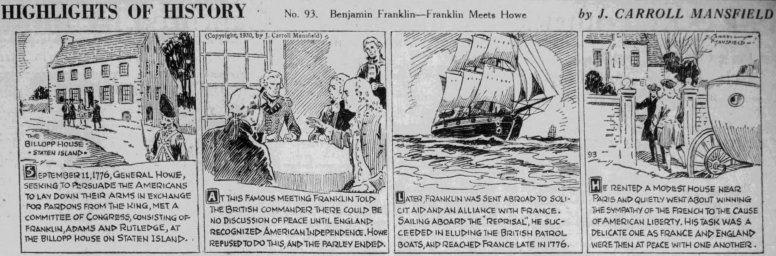
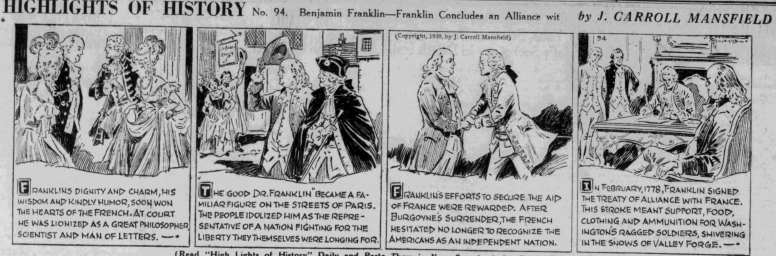
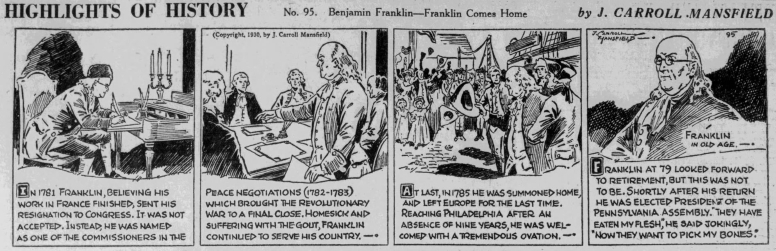
But modern comics creators aren’t ignoring our nation’s founding.
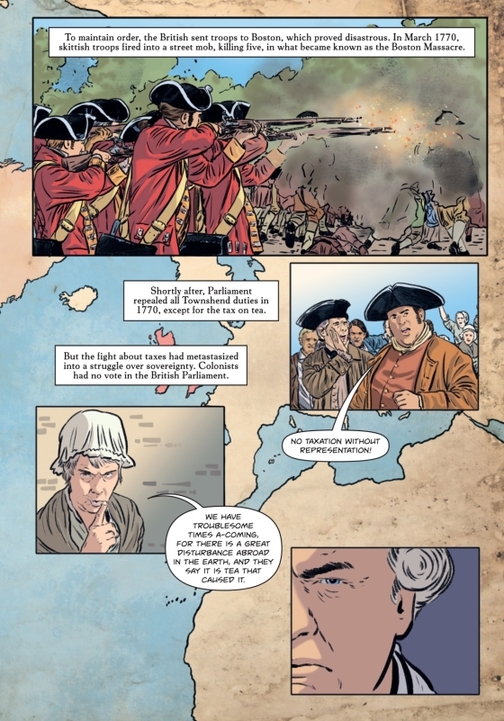
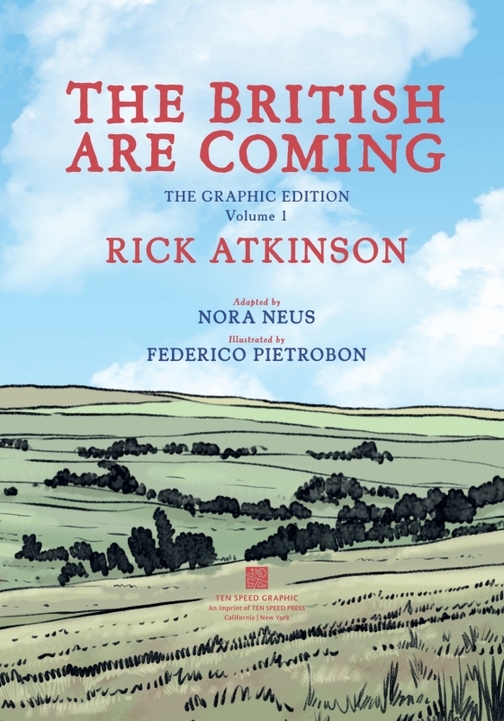
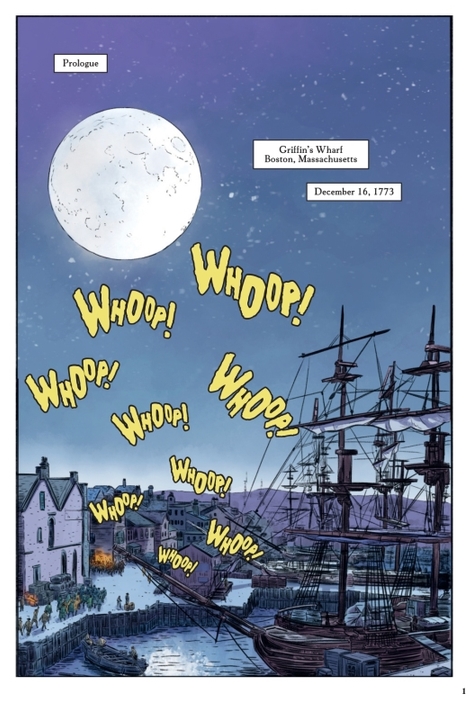
Nora Neus and Federico Pietrobon are adapting into graphic novel form Rick Atkinson’s The Revolution Trilogy, a brilliant history of the military campaigns during The War for Independence.
From the battles at Lexington and Concord in the spring of 1775 through the Siege of Boston in 1776, American militiamen and the newly created Continental Army take on the world’s most formidable adversary: the British Empire. The gripping saga is alive with astonishing characters: Henry Knox, the former bookseller with an uncanny understanding of artillery; Nathanael Greene, the blue-eyed bumpkin who becomes a brilliant battle captain; Benjamin Franklin, the self-made man who proves to be the wiliest of diplomats; and George Washington, the commander in chief who learns the difficult art of leadership when the war seems all but lost. The story is also told from the British perspective, making the mortal conflict between redcoats and rebels all the more compelling.
As Rick Atkinson told the Associated Press he didn’t just sign off on the project but is involved in the production:
“They are entirely amenable to my suggestions, ‘This isn’t quite right,’ or ‘I think this needs to be explained,’” Atkinson told The Associated Press. “With the drawings, I pointed out that John Adams, at the time the revolution began was a relatively young man. And they had made him look like the paunchy, bald John Adams of the vice presidency. And they fixed it.”
The author says that he was initially skeptical about the new project. With early memories of Superman comics, he wondered how any illustrator might adapt deeply-researched books that run longer than 500 pages. But the graphic format has been used on everything from “The Odyssey” to the drafting of the U.S. Constitution. Atkinson changed his mind after Ten Speed Graphic, a Penguin Random House imprint, sent him several adaptations, including of the life of Frederick Douglass and Timothy Snyder’s “On Tyranny.”
“I saw that the comic books of my youth have evolved considerably and I was enthused about it,” Atkinson said. “They said, ‘We acknowledge this is serious history that you do. We don’t intend to dumb it down. Our ambition is to widen the audience, to pitch this story of the American founding to an audience that perhaps might be intimidated by a 560 page book.’”
Which brings us to…
The Document of the Day
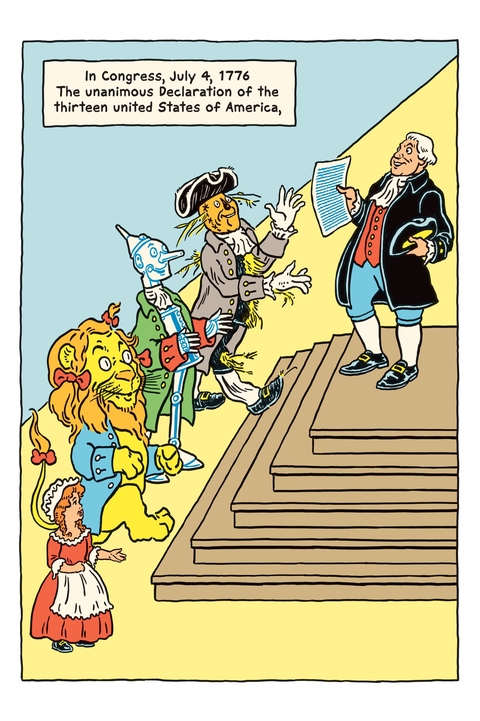
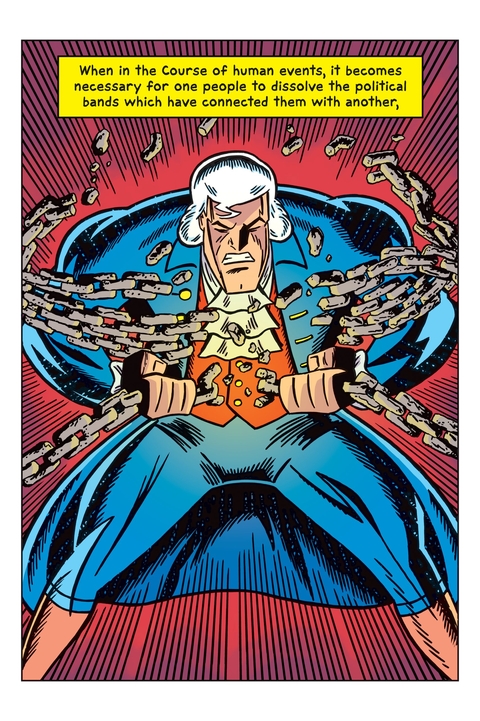
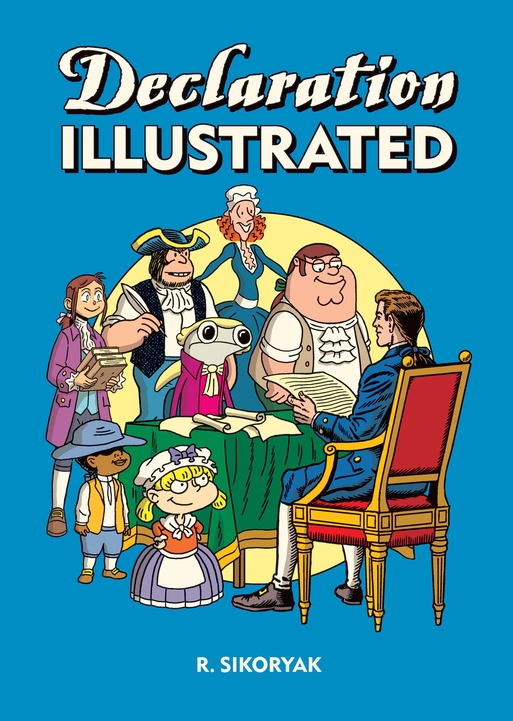
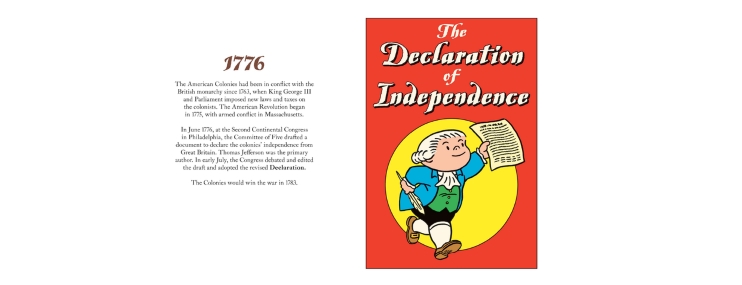
The Fourth of July is shorthand for the entirety of The Revolutionary War, but the date itself is specific to one document: The Declaration of Independence.
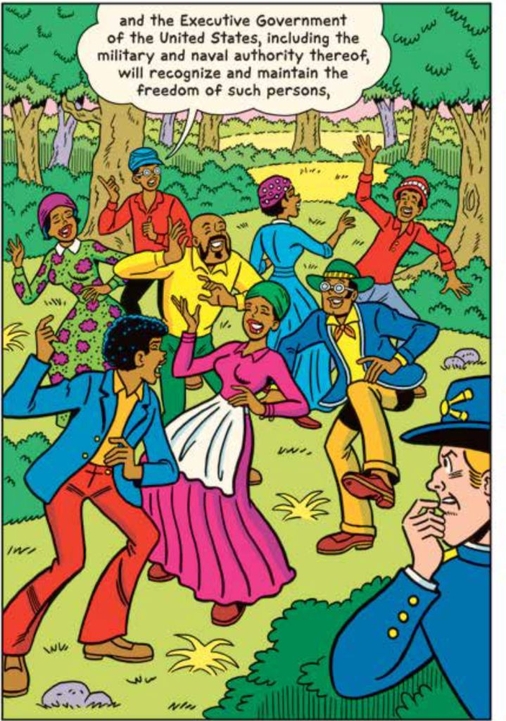
R. Sikoryak and Drawn and Quarterly have issued Declaration Illustrated/Emancipation Illustrated as a 128 page graphic novel celebrating 250 years since its approval and release by the Second Continental Congress.
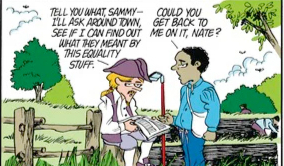
As Sikoryak did with his earlier Constitution Illustrated he adapts scenes from comics and the comic artists styles matching them to appropriate sentences from The Declaration.
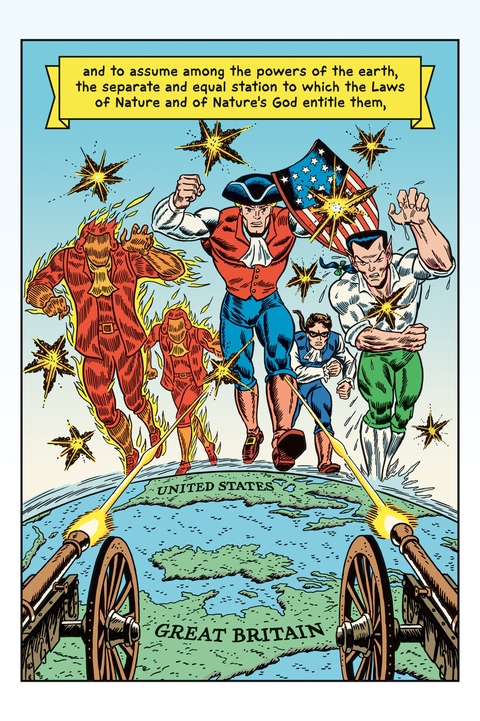
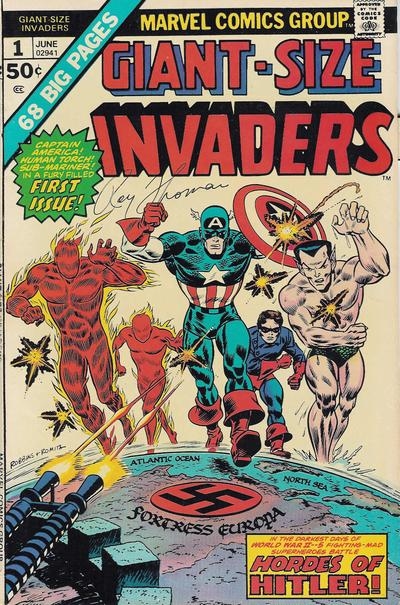
Steven Heller interviewed R. Sikoryak about his latest project.
Over the past decade, Sikoryak has remixed the defining texts of American nationhood at a moment when the country’s destiny is in peril. In 2020 he adapted the Constitution, and now he’s tackling the Declaration of Independence, the Emancipation Proclamation and the Gettysburg Address. Word for word, he’s cannily remixed the documents with the art and characters of over 100 different American cartoonists. Below, he riffs on his process and why he tackled such an ambitious project.
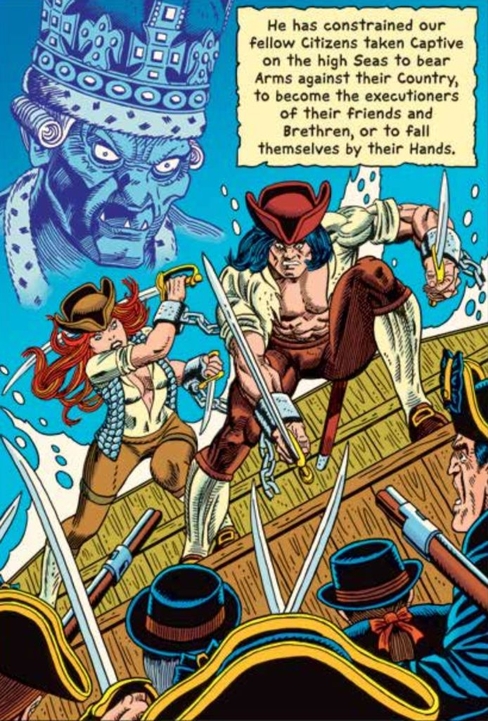
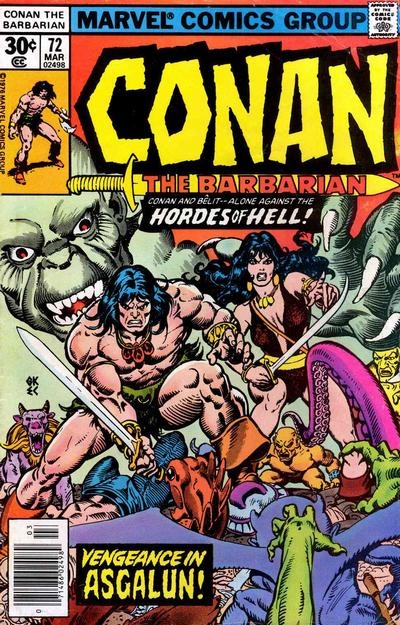
For the Emancipation Illustrated section of the book Sikoryak used the same style:
Happy Fourth of July!
We hold these truths to be self-evident, that all men are created equal, that they are endowed by their Creator with certain unalienable Rights, that among these are Life, Liberty and the pursuit of Happiness.–That to secure these rights, Governments are instituted among Men, deriving their just powers from the consent of the governed, –That whenever any Form of Government becomes destructive of these ends, it is the Right of the People to alter or to abolish it, and to institute new Government, laying its foundation on such principles and organizing its powers in such form, as to them shall seem most likely to effect their Safety and Happiness.
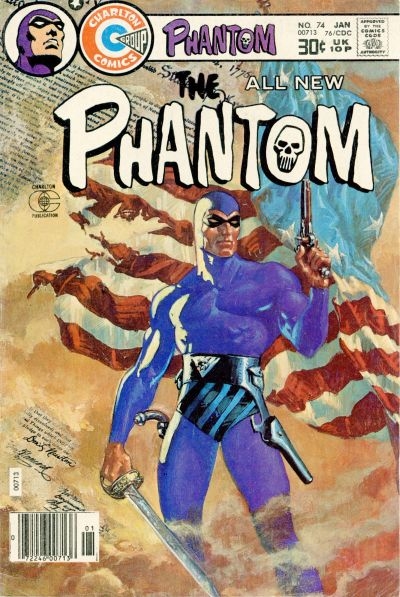

the Comic Book Database for the comic book covers
Comments 4
Comments are closed.