CSotD: Some Dogged Attempts at Humor
Skip to comments
I met my newest granddog yesterday, a little King Charles who is very friendly and has the exuberance of a six-month-old. My own dog, who is not much bigger but is about five years older, at one point told him to cool his jets, which is how puppies learn, but he is a delight and I was pleased that granddaughter had done some serious research before making a choice.
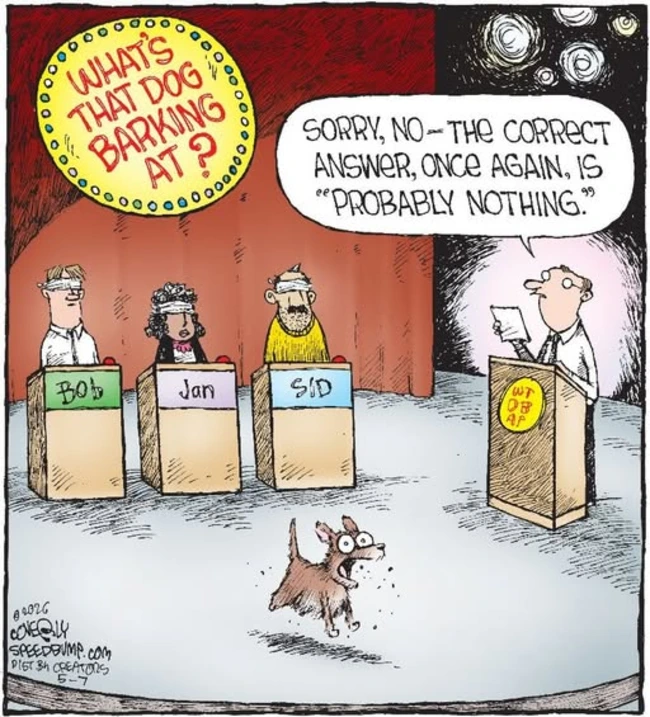
Schipperkes, for example, make their living like the fellow in this Speed Bump, by raising holy hell over anything or possibly nothing. That’s understandable, since they’re supposed to guard barges but weigh about as much as a gerbil. However, if you don’t want a lot of noise, they’re a dubious choice.
And to forestall the “adopt, don’t purchase” objections, they wanted to, but they live in an apartment and found the agencies impossible to deal with. I’ve known people who don’t have fenced yards and have borrowed other people’s houses so they can pass the rigid inspections.
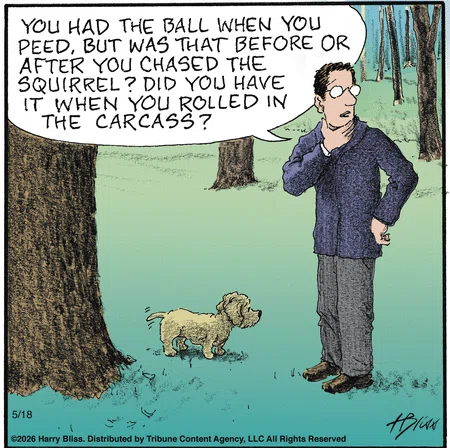
There aren’t many negatives about living in an area where you can walk your dog in the forest, but Harry Bliss, who lives a little way south of me, mentions the main one. And it’s not just balls. Somewhere amidst the trees here is an electronic collar that slipped off one of my dogs’ necks about a decade ago and while you can make them beep, they don’t do it loudly enough to reveal their hiding places.
And to forestall on that mention, if you have to use the shock button more than once or twice during initial training, the control problem is at your end, not the dog’s. After training, the beeper is just a way of saying “Hey! Focus!”
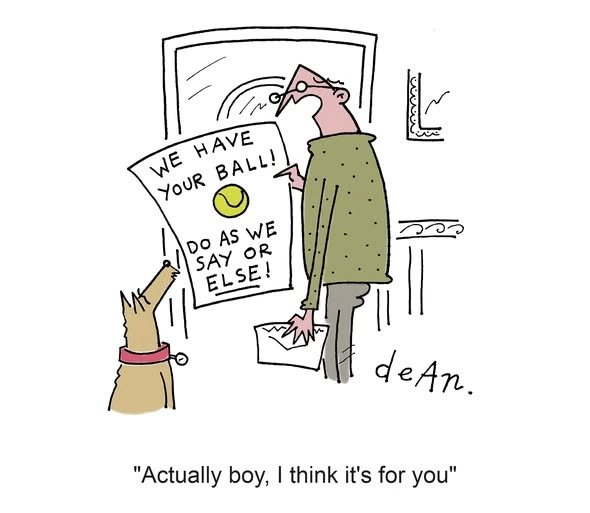
Losing a tennis ball isn’t the end of the world, since a ball that is no longer bouncy enough for actual tennis is still good for fetching, and so getting one free is no problem. However, my girl can strip, split and start eating a tennis ball in seconds, and the orange Chuck-It balls that dogs adore, while not expensive, are expensive enough that you don’t want to lose one.
Or drop it down the bank into the Connecticut River. Looking at you, Henry.
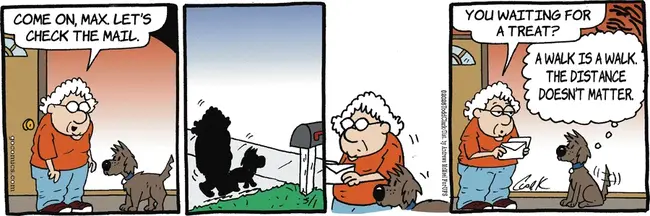
More than a rule, it’s a commandment: When you come back from a walk, you get a cookie. She’s lucky he didn’t insist on one when they reached the mailbox.
And he gets a cookie at the end of the walk, even if at some point he pulled the leash out of her hand and took off after a squirrel. It’s not a reward for past behavior, because “past” for a dog is about three minutes; it’s protection payment for future behavior.
Also, dogs have a limited grasp of logic. I get a kick out of hearing people try to reason with their dogs: “You know if you eat grass, you’re going to throw up.” No, he doesn’t. That’s why he relies on you.
Whether it’s wise to rely on you is also beyond his ken.
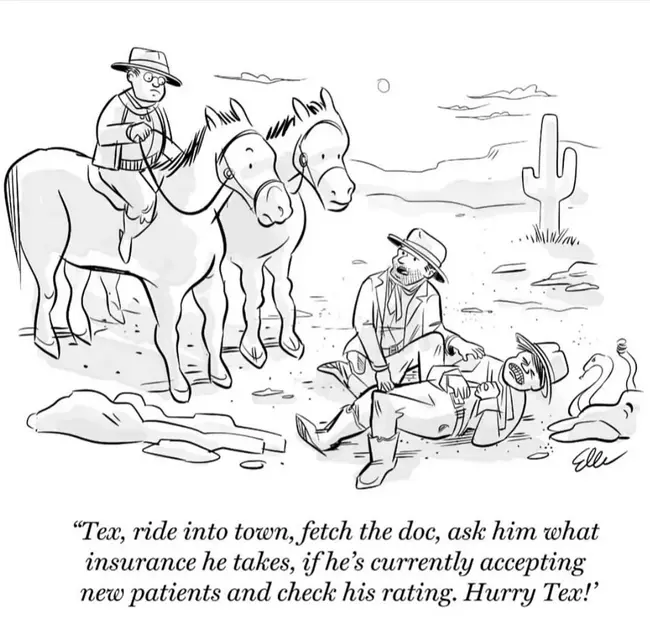
This doesn’t sound like a dog cartoon, but one of the professional dog walkers in our group has a disk problem in her back and no insurance. Obviously, being unable to walk upright puts her out of work; now she’s on an eight-month waiting list to get a PCP, even if she can work out some way of paying her medical bills.
Maybe I should have saved this for a day when I was doing political commentary.
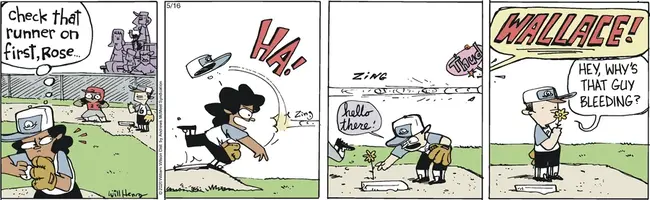
Different ball, different players, and I’m not going to question whether little girls in Snug Harbor play hardball rather than softball, because one of the reasons WtB is so outstanding is the distinctions between the characters.
Spud is such an obvious schlemiel that putting him at first base would be a coaching problem, not his problem. Spud, in the words of the song, belongs out in right field watching the dandelions grow.
And while Amelia would be delightfully furious with Wallace for not paying attention, Rose is the one so logic-bound that she assumes he will. Amelia does not expect others to keep up with her; Rose — as her thought process reveals — can’t imagine why they wouldn’t, despite repeated examples that they won’t.
It’s not enough to just have a stupid character, an angry character and an unreliable narrator. You need to populate a strip with real people.
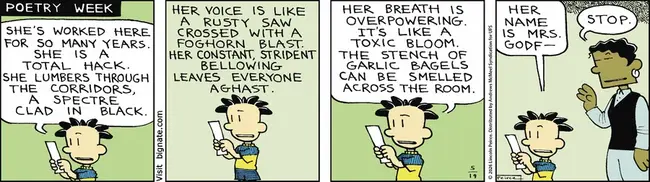
I was reminiscing about bad teachers with someone the other day, and this Big Nate falls right into our conversation. Nate is in middle-school, so, much as he dislikes Mrs. Godfrey, he only has to deal with her for 45 minutes at a time, whereas, in Frazz, Caulfield is stuck with Mrs. Olsen all day long.
Which may be why Mrs. Olsen began as an ogre but mellowed over the years: You couldn’t continue the storylines if she were a one-dimensional incompetent, and it’s more challenging to see that she means well and even does a decent job, at least on her good days.
Unfortunately, in real life “mean” teachers are consistently mean, and being stuck with them all day for an entire school year can be memorable not in a good way.
I had a conversation with a fourth-grade teacher once about the dilemma of having a toxic teacher in the grade ahead. At the end of the year, you have to sentence a third of your kiddos to spend a year under her sway: Do you send the bright ones you think can survive it, or the ones you figure are likely lost causes anyway?
And, to make the choices more unbearable, let’s assume you’ve made some progress with those “lost causes.”
One superintendent told me that every administrator has a list of faculty whose years before retirement are marked in his mind like a prisoner chalking off marks on his cell wall.
They’ve given you a number: 8647
This is too good to save, so I’m sharing it on Humpday in case anybody thinks the rightwing has a monopoly on idiotic rumors:

They apparently assume a guy who can’t understand tariffs and trade imbalances can, however, read Mandarin.
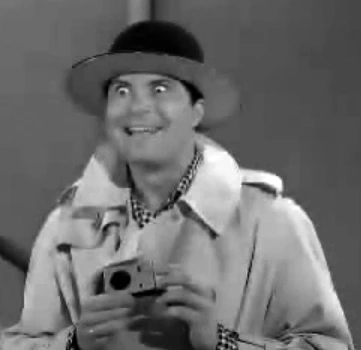
Golly, maybe Dear Leader is a double-naught spy!
Mike Peterson has posted his "Comic Strip of the Day" column every day since 2010. His opinions are his own, but we welcome comments either agreeing or in opposition.

Comments 17
Comments are closed.