Op-Ed Page Two
Skip to comments
More on Patrick Lamontagne World Press Freedom award, Nazi Germany’s pressure on cartoonists, and an argument that comics are NOT for Kids.
Patrick LaMontagne Receives International Award
A week and a half ago we reported on the World Press Freedom International Editorial Cartoon Award winners. As a followup here is The Calgary Herald noting that one of their regulars was among the top three. This story via MSN.
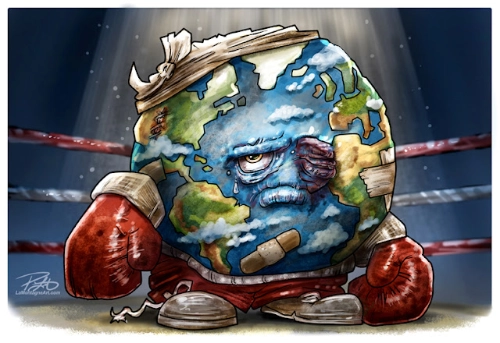
An editorial cartoonist whose work is regularly published in the Calgary Herald has received a prestigious honour. Patrick LaMontagne has been awarded third place in the 26th International Editorial Cartoon Contest, organized by World Press Freedom Canada.
The award is particularly meaningful in that it comes from an organization that advocates press freedom.
The article quotes LaMontagne and World Press Freedom Canada and includes more selected cartoons.
The Third Reich’s War on Cartoons
Hank Kennedy contributes an essay to The Comics Journal about Nazi pressure on cartoonists leading up to and during World War Two.
Nazi Germany is not a place we think of as being full of yuks. Italian Communist Palmiro Togliatti once remarked to novelist Ignazio Silone thus, “In judging a regime, it is important to know what it finds amusing.”
Turning Togliatti on his head, one can also learn a great deal from which amusements a regime tries to prevent. Here, the Nazi example is likewise instructive. Despite their meticulously curated reputation for ruthless invincibility, the leaders of the Third Reich were sensitive to mockery and satire; so sensitive that they made efforts to fight caricaturists both at home and abroad.
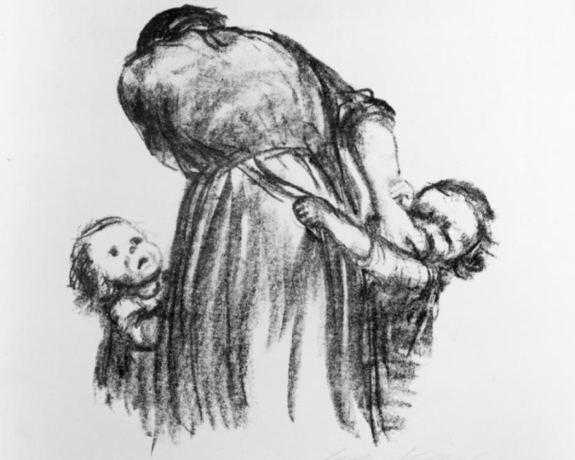
Artists, caricaturists, and cartoonists like Käthe Kollwitz, John Heartfield, and George Grosz are held up as those who stopped producing or fled the country fled Germany in order to survive and continue their mission. Of course David Low is held up as an example of foriegn cartoonists getting under Hitler’s thin skin.
Kennedy brings the Axis actions of WWII to the modern age:
Regimes censoring, harassing, or even imprisoning cartoonists are not things confined solely to the Nazis and the history of the Second World War. Egyptian cartoonist Ashraf Omar has been imprisoned by that country’s dictatorship as of this writing. After being indefinitely detained for over a year, Omar has ridiculously been charged with terrorism over his artwork.
Turkish cartoonist Pehlevan has been imprisoned for insulting President Erdogan and “inciting hatred and enmity” for supposedly depicting the prophet Muhammad. Palestinian cartoonist Mohammad Sabaaneh was imprisoned by Israel in 2013, also under absurd charges of terrorism.
Although the First Amendment protects American cartoonists from such obvious suppression…
Comics Aren’t Just For Kids Anymore – And Never Were?
Comic strips have been appearing steadily in newspapers across the country since around 1900, and comic books have been a staple of American childhood since the early 1930s. Today, comics and comic books are thought of as an art form entirely dedicated to children, with the baseline being superheroes in bright color imparting heavy handed morals. Despite this centering of children in both comics writing and targeting, comics appear to be a relatively unsafe place to be a child.
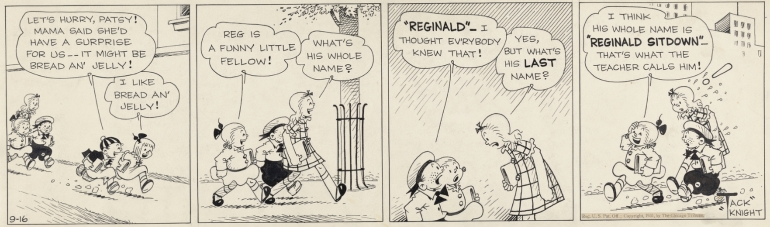
Newspaper comic strips serve a primarily adult audience. Characters are usually adults themselves and play into more mature situations and humor. Children will occasionally appear in these strips, but their portrayal is often, at best, set dressing or props for their parents. At worst, these children are pushed into the “loveable nuisance” archetype.
The Center for the Humanities Comics Collection holds thousands of comic books from over five decades; some of these titles specifically target a younger demographic. When looking through the comic books published specially for a juvenile audience, themes of endangerment, abandonment, and abuse were presented as common and central to the stories.
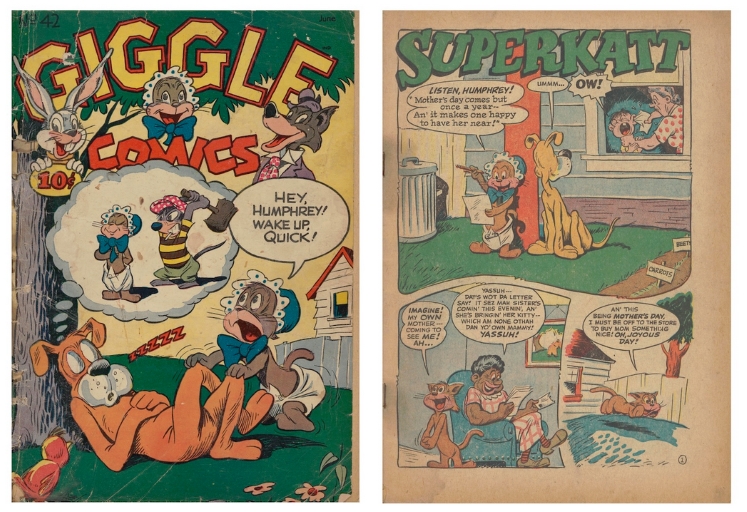
Another children’s comic imparting nearly the same message in an equally disturbing way is found in a Giggle Comics story featuring the character Superkatt. What makes this particular storyline far more disturbing is the fact that it’s meant as a Mother’s Day tribute where the opening panel depicts a mother’s hand around her child’s throat.
Ultimately, it’s hard to imagine any of these storylines getting approved for publication today. A historical gripe against comic books has been their supposed bad influence on children, causing delinquency. Perhaps these stories of punishment are meant as a counterbalance. With stories like these being handed to children, one has to consider the lasting impact on young minds…

Comments 3
Comments are closed.