CSotD: Ways of Knowing, and Being
Skip to comments
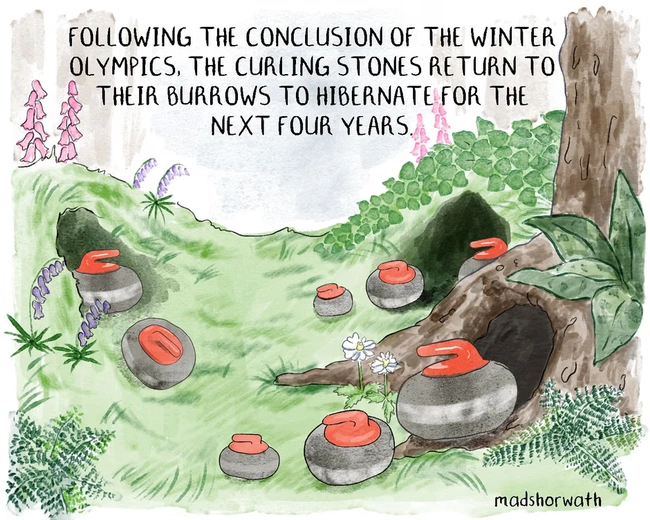
This is a lovely picture and I agree with her premise that, unless you can get Canadian TV, you aren’t apt to see a lot of curling until the next Winter Olympics. There are several Olympic sports that don’t get much coverage except then, like biathlon, which does feel like a traditional Olympic sport, given its potential military application.

Things like speed skating exist because they ought to. The Rideau Canal in Ottawa is a skating rink this time of year. When I interviewed Canada’s Foreign Minister, Flora MacDonald, she had a pair of shiners from having caught a crack and face-planted on the Rideau, but she was in her mid-60s, which I think is proof that speed-skating isn’t confined to superstars, though she was certainly one in all sorts of other ways.
There was a young woman who used to skate on the rink at our college. She never did any spins or tricks, just went around and around, looking happy and beautiful. Then I saw her one day walking away from the ice and she looked rather plain: It was the joy of skating that made her so pretty.
Everyone should find something that does that for them.
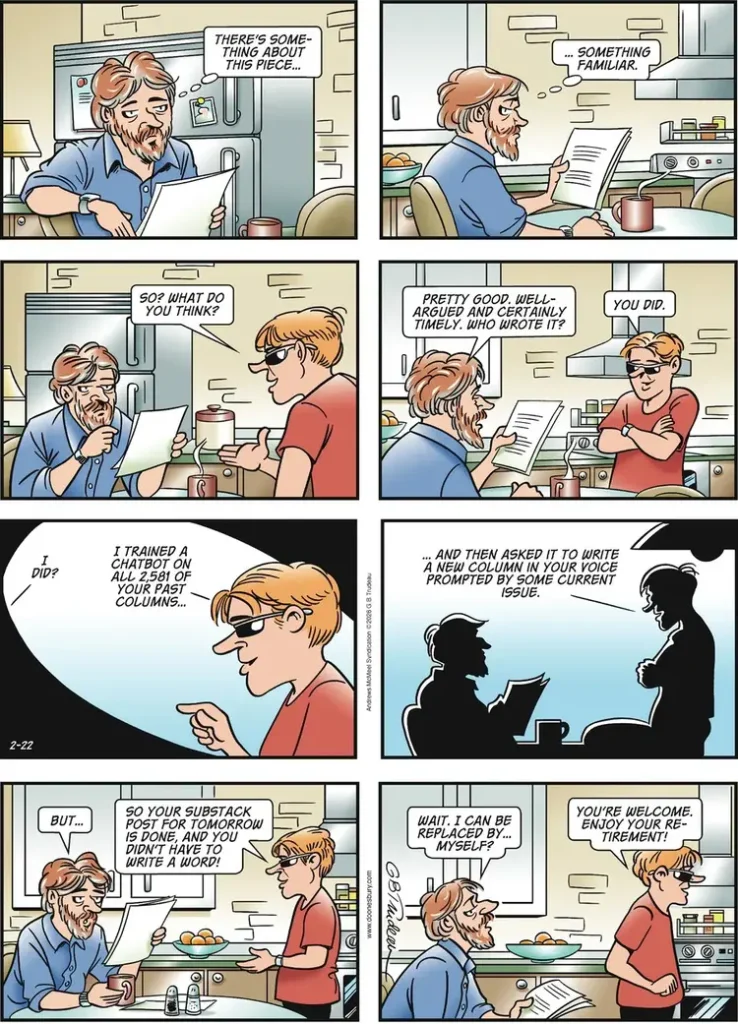
For me, the activity that puts me into pleasant superconsciousness is writing, but I laughed at today’s Doonesbury anyway, because it’s not all that far-fetched that AI could pick up the flavor of a columnist’s work, given that you do settle into a groove after a time.
You could strip the by-line off a Maureen Dowd, George Will or Mike Royko column and most readers could tell who’d written it. Being able to ape the style isn’t the same as being able to come up with the insights, but still I wonder, if you put together five columns alleged to be by the same well-known writer, one of which was AI generated, how many people could pick it out?
However, there’s also this: In 1980, when USOC was meeting in Colorado to decide whether to boycott the Moscow Olympics, I was hired to fax the Sports Illustrated writer’s coverage to New York, it being a lengthy process back then.
I held on to his copy and read the magazine when it came out and was stunned at how little what appeared there resembled what he’d written.
It isn’t writers, but editors, who should worry about being replaced by AI.

I find the amount of rampant bogosity on social media to be a serious issue. We used to say “Seeing is believing,” but that’s not the case anymore. AI still makes a few mistakes here and there, but the days of people with seven fingers are nearly over and Facebook’s “Reels” are dominated by convincing nonsense presented as fact.
It’s no longer just the Russians who are flooding the Internet with fake propaganda videos; a Vietnamese AI forger put up an alleged meeting of late-night hosts a few weeks ago that got massive clicks and shares and never happened.
People keep quoting that line from 1984, “The party told you to reject the evidence of your eyes and ears. It was their final, most essential command.”
Those were the good old days. Now we see video of our heroic war against Eastasia as proof that we have always been at war with Eastasia.
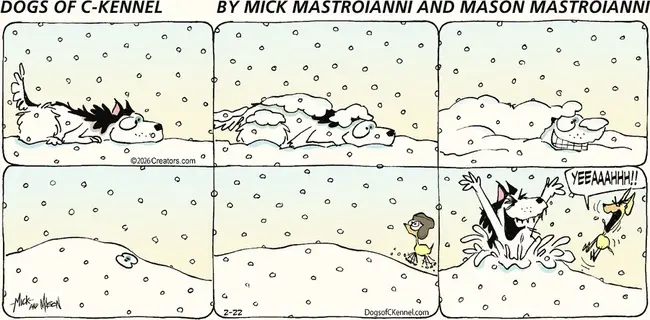
On to happier things: I’ve lived near strings of sled dogs a couple of times, and they really do curl up and go to sleep under a thick blanket of snow. The challenge between races for a musher is to keep their water dishes from freezing solid; the dogs are fine out there.
The challenge for new neighbors is not to freak out the first time they hear the dogs being fed, because they’re awfully wolfie and when they get excited, their howling will make your hair stand up.
Once you know what it is, it’s really beautiful, but in a spooky back-to-the-caves kind of way.
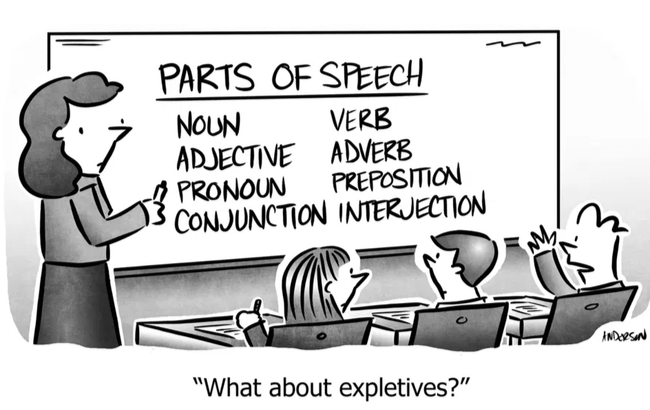
Mark Anderson is younger than I am: While the word “expletive” has been around a long time, it didn’t come into use until Watergate, when transcripts of the White House tapes were bowdlerized with the term “expletive deleted.”
When I was a lad, however, a short exclamation was called an ejaculation, and it came up in religion classes more often than in grammar lessons. “My Lord and my God” is an ejaculation and you were supposed to say something similar whenever you passed a (Catholic) church. And each time you made an ejaculation, you earned time off your sentence in Purgatory.
In Up the Down Staircase, Bel Kaufman wrote of the importance of teaching the poem “Old Ironsides” to a junior high class without saying “frigate,” but the word isn’t in the poem and you can just call it a ship.
Considerably easier, then, than teaching them religion.
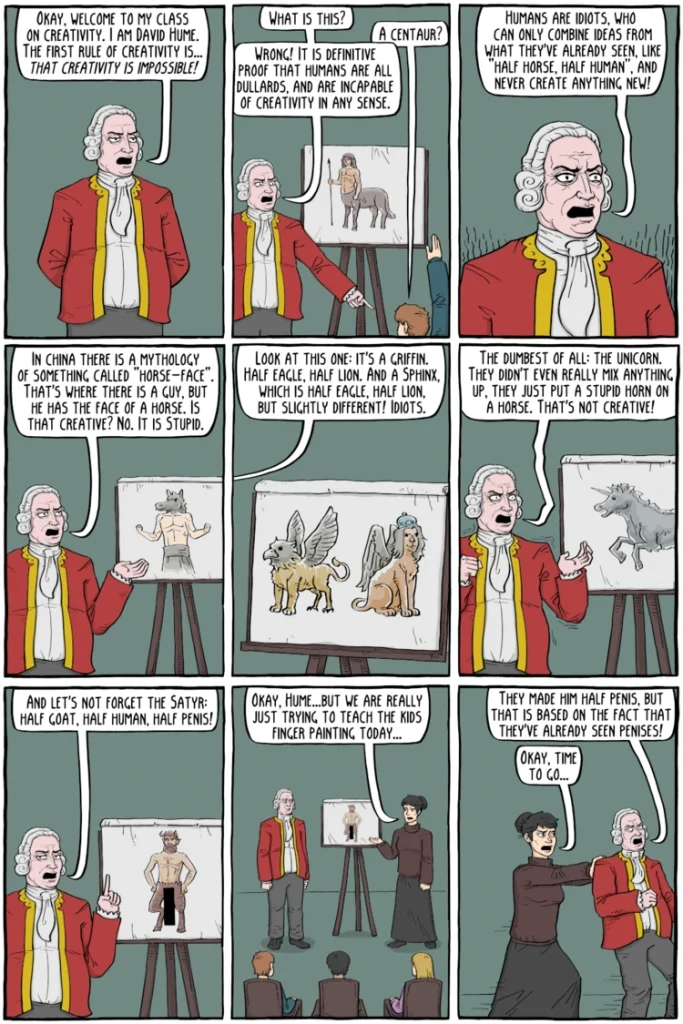
Existential Comics surprised me, because it’s been a long time since I’ve read Hume, but I associate him with his theory that you can’t prove causality, as seen on that first day of metaphysics in which the professor holds up his pen and asks what would happen if he let go of it. And then asks how you know it will fall, and insists that you can’t be sure.
I associate the theory that everything we imagine is a combination of things we know exist with Anselm, who used it to prove the existence of God: Perfection doesn’t exist on Earth and therefore the fact that we can think of it means it must exist but only in the person of God. Or something; it’s been a while and I thought it was horsefeathers at the time.
Which don’t exist but are a combination of horses, which exist, and feathers, which also exist.
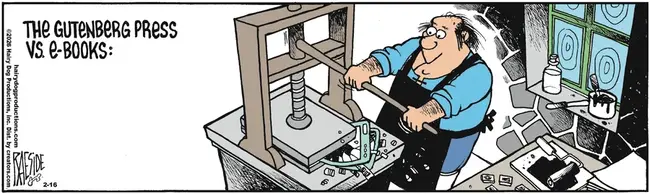
Gutenberg helped free minds by permitting mass publication so people could read, and think, for themselves instead of being given lights to follow. Which is only to say they could, not that they would.
I’m not sentimental about print. Whether the seeds fall upon rich or rocky ground is not about whether they were strewn by paper, on-line or by Kindle.
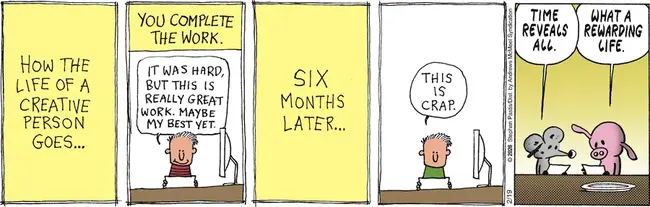
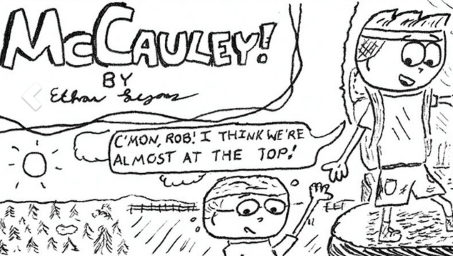
But some comic strips sure are well-named:

Mike Peterson has posted his "Comic Strip of the Day" column every day since 2010. His opinions are his own, but we welcome comments either agreeing or in opposition.

Comments 12
Comments are closed.