CSotD: The Press Under Pressure
Skip to comments

Danziger explained it all back in 2018, but it’s a much older story than that. For Americans, as everyone who paid attention in high school social studies knows, the issue of press freedom was raised when we were still a British colony.
In 1734, New York’s royal governor charged John Peter Zenger‘s newspaper, The New York Weekly Journal, with libel for a series of attacks upon him. Zenger’s attorneys argued that Zenger had published the truth and therefore hadn’t libeled the governor. Whether or not the law was on Zenger’s side, the jury was, and took ten minutes to find him not guilty.
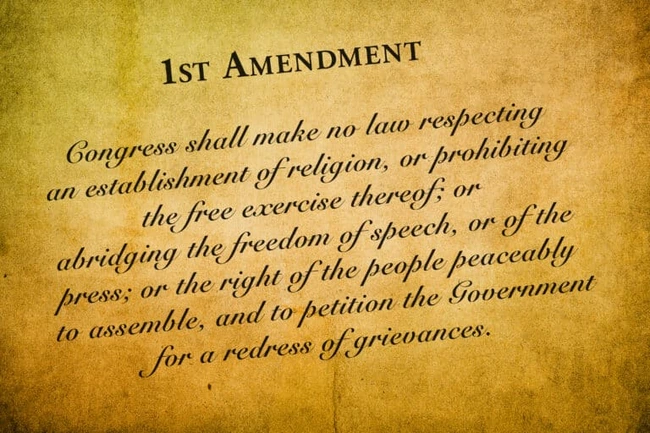
A generation later, when the Founders were establishing the freedoms of the new nation, they wrote Freedom of the Press into the Bill of Rights that became part of the Constitution, and, to this day, the New York State Bar Association awards the John Peter Zenger Award each year, which I know because I won it in 1992, though it eventually fell off its base and I pitched it because I don’t think much of awards.

But I haven’t pitched my belief in press freedom, and I mention the award because I’ve practiced journalism in many formats over half a century, and, as we ponder the case against Freedom of the Press being pursued in Minnesota, Kelley raises the question of “Who is a journalist?” and it’s worth answering.
When the NAACP was looking to challenge Montgomery’s segregated buses, they passed on using the case of Claudette Colvin, because she was a teenaged single mother, instead choosing Rosa Parks, a college-educated officer in the local NAACP. As Parks said of Colvin’s pregnancy, “If the white press got ahold of that information, they would have [had] a field day. They’d call her a bad girl, and her case wouldn’t have a chance.”
You don’t always get that choice, and with those who spit on press freedom eager, in Parks’ term, to have a field day, Don Lemon’s plain-spoken, opinion-laden style offers them that opportunity.
Meanwhile, his fellow defendant, Georgia Fort, adds another complication to things, since, though she has a more than respectable background in journalism, she is a freelancer, which opponents of the First Amendment can spin as something that doesn’t count.
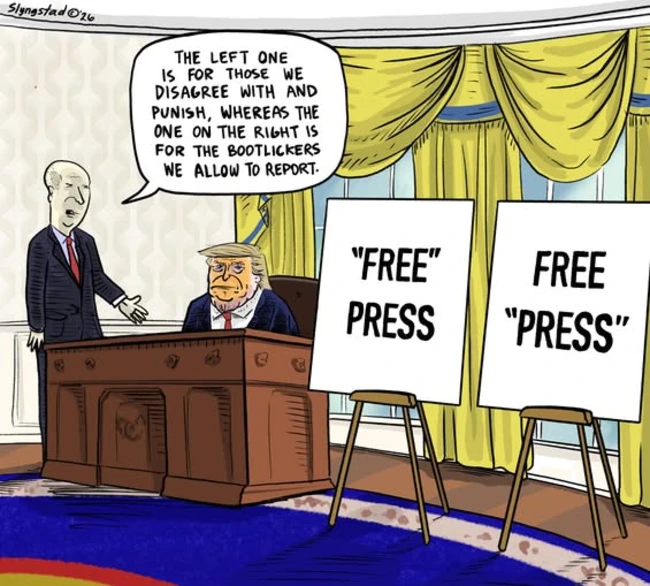
If Kelley feels expressing opinions means you’re not a journalist, then neither is he, but as Slyngstad suggests, the main prejudice against the First Amendment is hide-bound loyalism that insists you’re entitled to freedom of the press — and, for that matter, of speech and assembly — if what you do is in keeping with official aims, but not if it questions them.
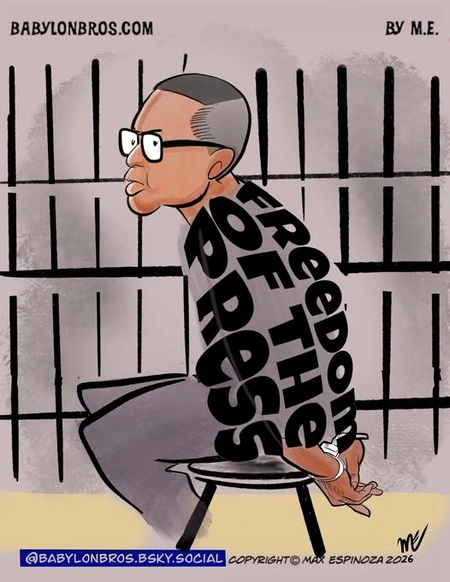
Which brings us back to John Peter Zenger, and to any number of journalists who have been sent to Soviet gulags and similar places where inconvenient loudmouths are confined to stifle their work.
What is important to remember is that, just as Claudette Colvin had every bit as much a right as Rosa Parks to sit where she liked on that bus, so, too, Don Lemon and Georgia Fort have the right to the protections of the First Amendment, whether you admire their work or not.
And what is even more important, what is crucial, is that whether you’re talking about Montgomery in 1955 or Minneapolis in 2026, or New York in 1734, the specific cases of specific individuals are not at the center of matters.
Their individual stories are trivial except for the place they serve as landmarks and milestones of everybody’s rights and freedoms. And they can be enormously significant once looked at beyond their specific details and into the overarching principle involved.
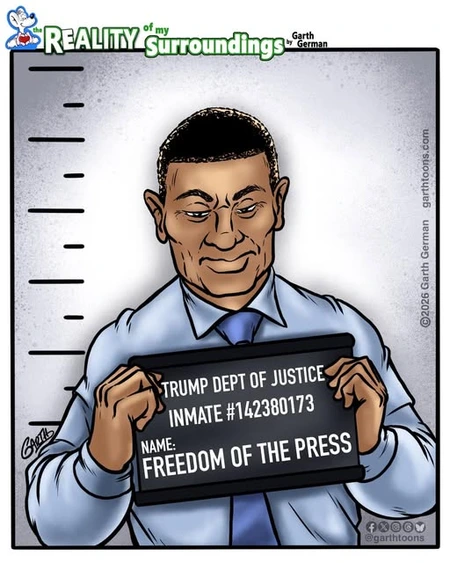
As German says, what is on trial is not Don Lemon, but Freedom of the Press. For that reason, his arrest, and that of Georgia Fort, should be seen as badges of honor, not because they were doing anything specifically brave or astonishing, though we’ve seen journalists in the streets of Minneapolis assaulted along with protesters.
Rather, what they’re on trial for is that overarching principle, and if they might not be the hand-selected, ideal exemplars a First Amendment group might choose to carry the banner, they’re facing a tissue-thin case so hard to justify that two judges turned down the government prosecutors, who then turned to a grand jury in desperation, seemingly intent to prove the old adage that you can indict a ham sandwich.
Or a Subway sandwich, and if justice prevails, they’ll do as well with this case as they did with that one.
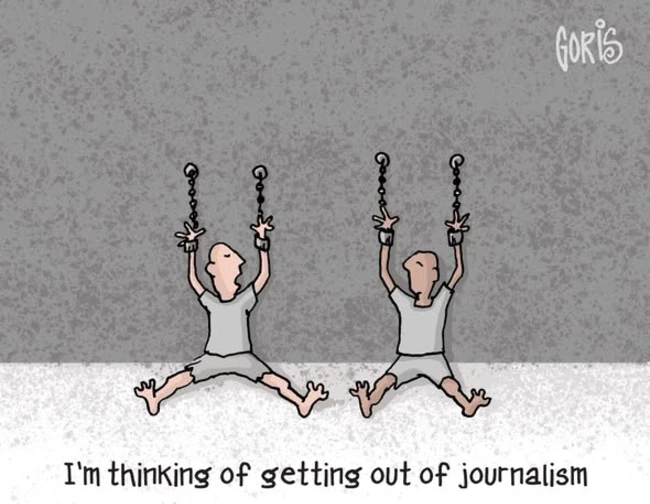
Lemon and Fort still have to go through the exhausting, painful process, and there’s no guarantee, despite the lack of substance in the government’s case, that they’ll be exonerated.
It’s worth noting that, for all the length, expense and exertions of the Chicago Eight trial, what few convictions resulted were ultimately overturned because of the blatantly unfair practices of the government and Judge Julius Hoffman in the trial.
And while Daniel Ellsburg might well have gone to prison for leaking the Pentagon Papers, his charges similarly were dismissed over prosecutorial malfeasance.
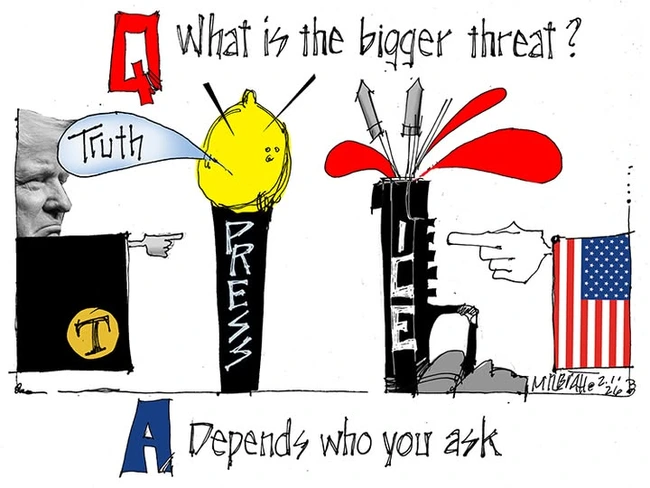
But note that nobody was charged for reporting on the police riot in Chicago, nor were the New York Times or Washington Post convicted for receiving and publishing the Pentagon Papers.
Journalism is not a crime.
As Milbrath puts it, truth is on trial, and however the matter of violence against protesters and against legal immigrants gets sorted out, the challenge to an open airing of information is what is before the courts right now.
It seems a slam-dunk, but you cannot rely on incompetent opposition, even in an apparently foolish case in which the defendants have clearly declared themselves, at the time and on the record, as journalists and not as participants in the matter.
The Constitution is on their side. We’ll see if the courts are, too.
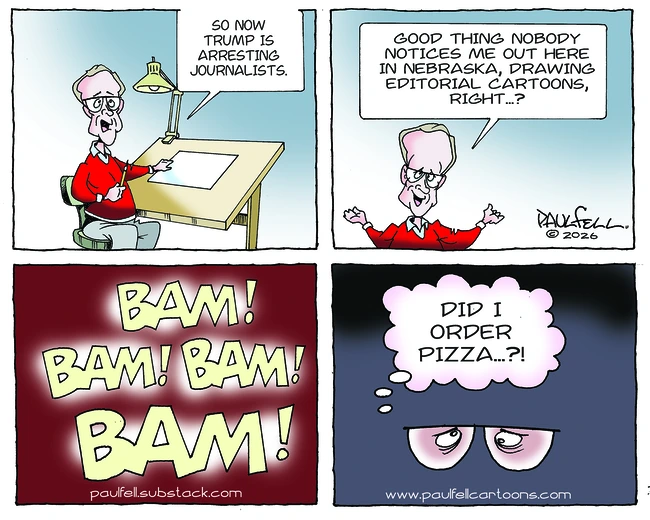
As Fell warns, American journalists of all types are going to find out whether they can rely on the guarantees of the First Amendment and the standards that have prevailed in this nation since before we were a nation.
Nothing is guaranteed. We’re ranked #57 in Press Freedom, and Reporters Without Borders explains why.
Meanwhile, support the people who support your freedom.
Mike Peterson has posted his "Comic Strip of the Day" column every day since 2010. His opinions are his own, but we welcome comments either agreeing or in opposition.
Comments 8
Comments are closed.