CSotD: Arma Virumque Canō
Skip to comments

Matt Wuerker sings of arms and the man with a Veterans Day cartoon. There aren’t as many “Little boys saluting tombstones” cartoons as usual, which is good, but, then, there aren’t as many cartoons marking the holiday at all, which is puzzling and, IMHO, not good.
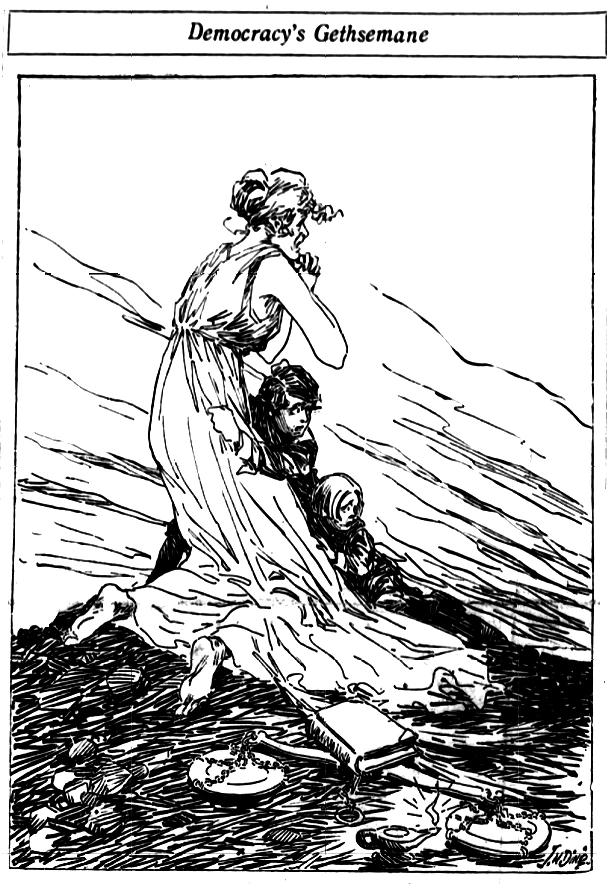
Most of the veterans who get the day off likely work at banks, schools or the post office, there are still people who pause, as Ding Darling did during World War I, to remember not only the warriors but the people they sacrificed for.
Juxtaposition of the Day
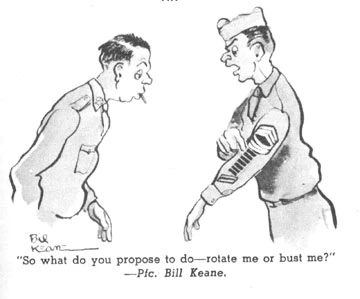
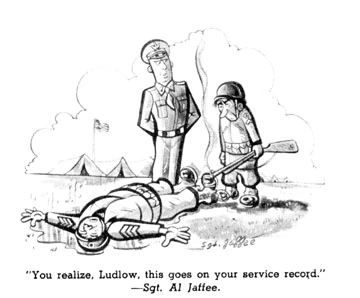
You’re surrounded by veterans and always have been. For example, Bil Keane and Al Jaffee both served and drew for Yank, the Army Weekly, before moving on to cartooning as a full-time career after the war.
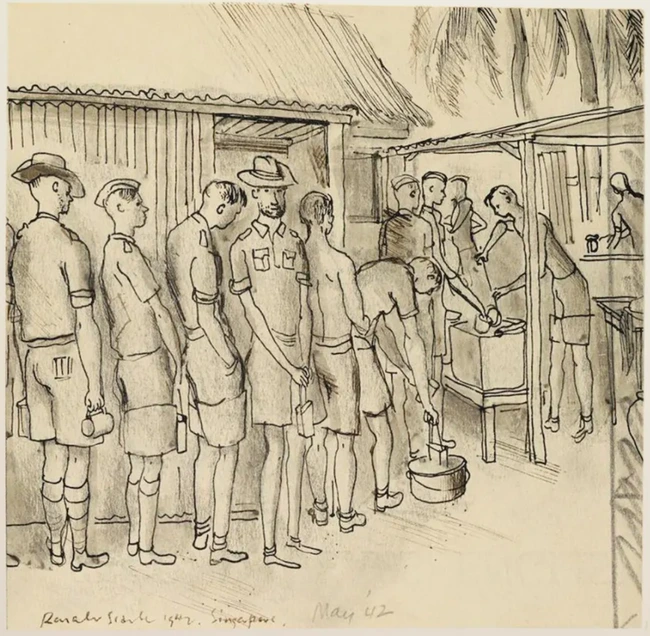
Ronald Searle also switched to cartoons about St. Trinians girls’ school, after drawing sketches on the sly in a Japanese POW camp.
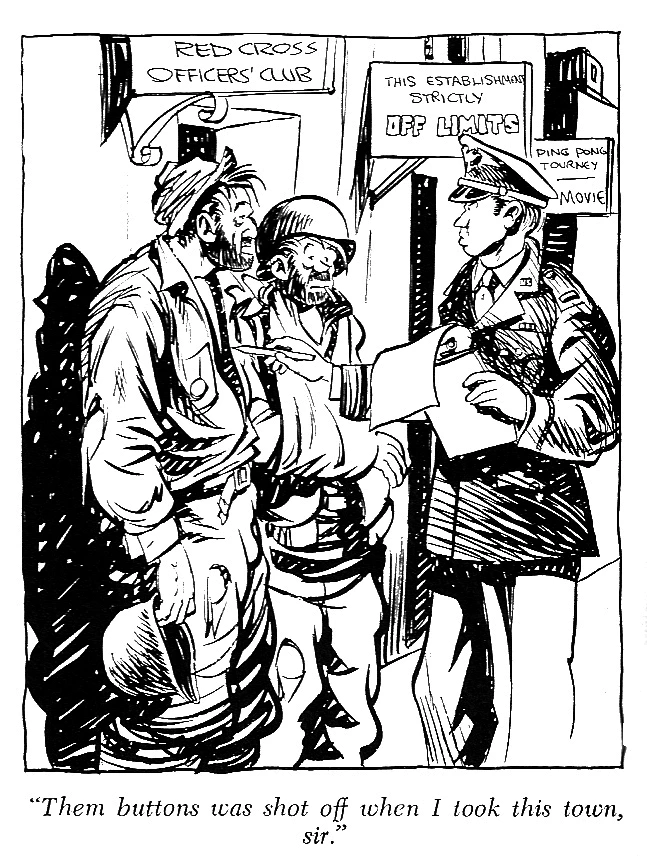
And while Bill Mauldin had a long, honored post-war career in political cartooning, it was his Willie and Joe cartoons that won him his first Pulitzer and remain his signature work. What began as a sideline for his unit’s newspaper became something of a second front in Stars & Stripes on behalf of the dogfaces who fought WWII.
General Patton disliked Mauldin’s work because it portrayed GIs as rumpled, dirty, unshaven and exhausted, but Mauldin defied him and continued cartoons in which anyone neat, clean and fresh-shaven was either a green replacement or an REMF.
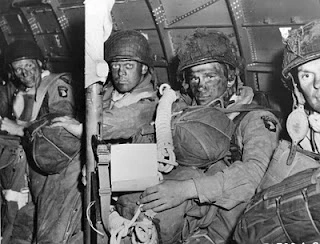
Sometimes they even started out with dirty faces. Bob Noody, the fellow looking over his bazooka gear, was later my barber, my school bus driver and an usher in my church, but, in this photo, was preparing to jump into Sainte-Mère-Église with the 101st Airborne.
He was wounded but recovered in time to rejoin his unit in time for the Bulge. Bob rarely spoke of those days, and never told his wife quite what he’d been up to until after the war, but, as I wrote years ago, he was a fundamental inspiration for my idea of what a man could be.
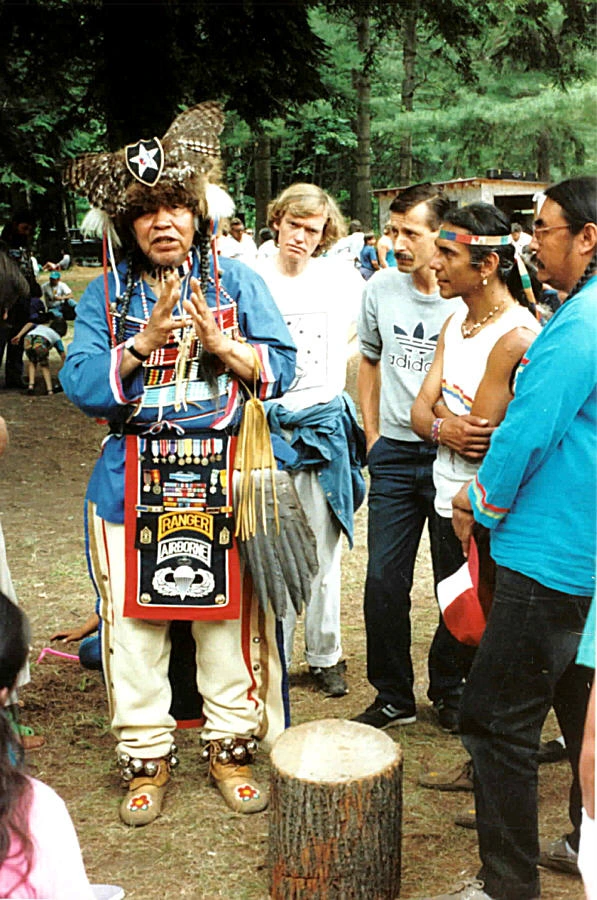
Glen Edwards went far beyond what a man could be. I took this picture of him at a healing ceremony in 1991, a year after the Oka Crisis in the Mohawk community of Kanesatake.
A member of the Lakes-Okanogan band in British Columbia, he was not only — as his medicine indicates — a veteran of WWII, Korea and Vietnam, but of the brutal residential schools, yet somehow survived a mountain of PTSD to become a holyman and a counselor for other vets, particularly First Nations people.
Listening to him speak was like meeting the Dalai Lama, and if Bob Noody had taught me that a man could be tough without being a loudmouth or a bully, Edwards underlined and emphasized how decency and honor can survive horror.
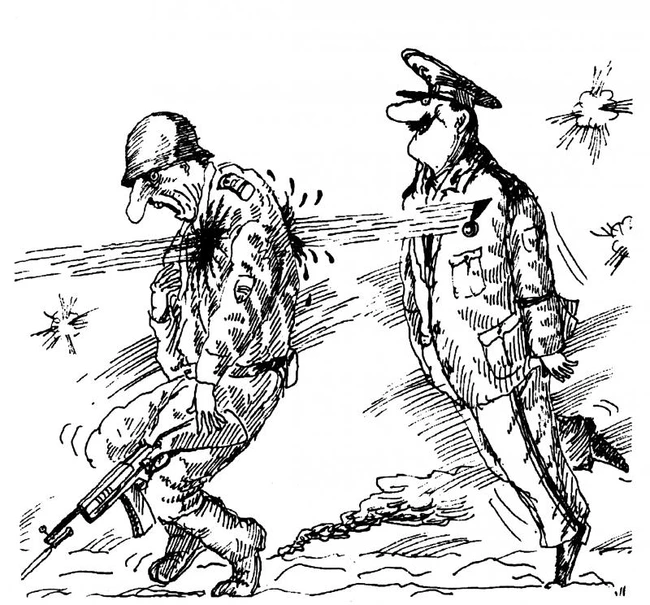
Life isn’t always fair, as Russian cartoonist Victor Bogorad made clear in this cartoon. We never learned much about their side of WWII in high school, and I didn’t learn of the Soviet sacrifices until I visited their exhibit in Montreal at Expo ’67 shortly before I left for college.
Well, I was educated during the Cold War.
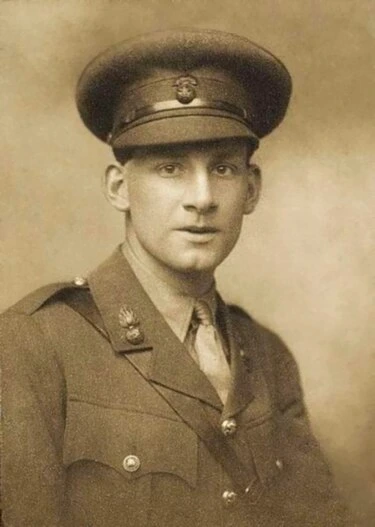
As for Bogorad’s cartoon, thus was it ever. In WWI, Siegfried Sassoon was initially a ferocious warrior of such unbridled nerve that he was nicknamed “Mad Jack,” as Robert Graves wrote in his must-read memoir of the war, Good-Bye To All That.
But after too many adventures and too many losses, he was hospitalized with PTSD and became a pacifist, writing poems like “Base Details:”
If I were fierce, and bald, and short of breath,
I’d live with scarlet Majors at the Base,
And speed glum heroes up the line to death.
You’d see me with my puffy petulant face,
Guzzling and gulping in the best hotel,
Reading the Roll of Honour. “Poor young chap,”
I’d say—”I used to know his father well;
Yes, we’ve lost heavily in this last scrap.”
And when the war is done and youth stone dead,
I’d toddle safely home and die—in bed.
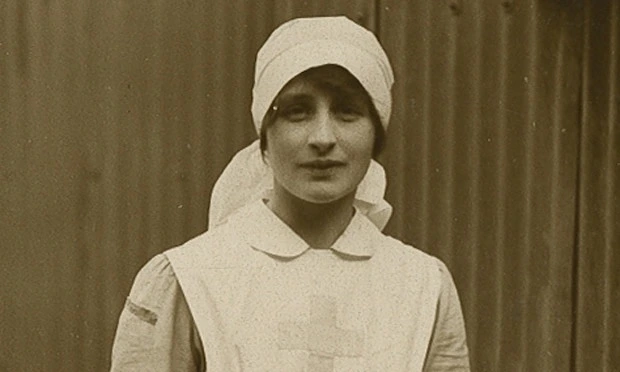
Vera Brittain, too, was scarred by WWI. As a nurse stationed just beyond the front, she saw plenty of misery, but even beyond that, she lost her fiancé, her brother and their closest friends in the war, then found fresh sorrow in the world the survivors returned to, as she wrote in “The Lament of the Demobilized:”
“Four years,” some say consolingly. “Oh well,
What’s that? You’re young. And then it must have been
A very fine experience for you !”
And they forget
How others stayed behind and just got on –
Got on the better since we were away.
And we came home and found
They had achieved, and men revered their names,
But never mentioned ours;
And no-one talked heroics now, and we
Must just go back and start again once more.
“You threw four years into the melting-pot –
Did you indeed !” these others cry. “Oh well,
The more fool you!”
And we’re beginning to agree with them.
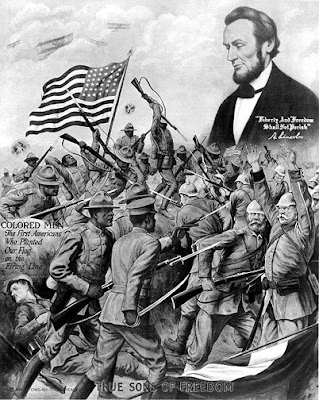
As part of my educational programs at the local newspaper, I reprinted Andrew Johnson’s account of his experiences as a Black soldier in WWI, taken as an oral history in the WPA’s Federal Writer’s Project, and illustrated it with this recruiting poster.
The experience of being treated well in Europe brought Black veterans home with new pride and an appetite for justice that led to a spate of lynchings, but then fueled the Double-V Movement when their sons were asked to go back again in WWII.
The push for civil rights got a boost when Cpl. Rupert Trimmingham wrote a letter to Yank Magazine, telling of having to eat in the kitchen of a diner while German POWs ate at the counter. His letter drew outraged responses from white GIs, was dramatized on the radio and adapted into a short story in the New Yorker.
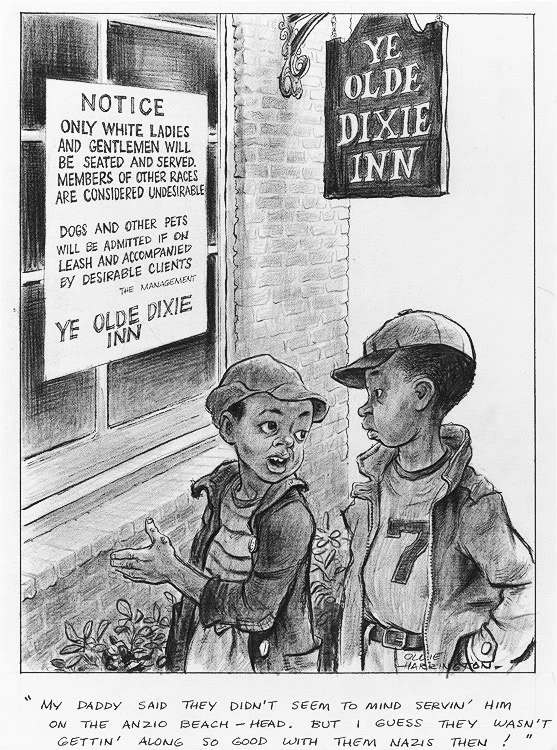
Black veterans were not ready to forgive and forget when peace came, as Ollie Harrington noted, and the Civil Rights Movement went into high gear.
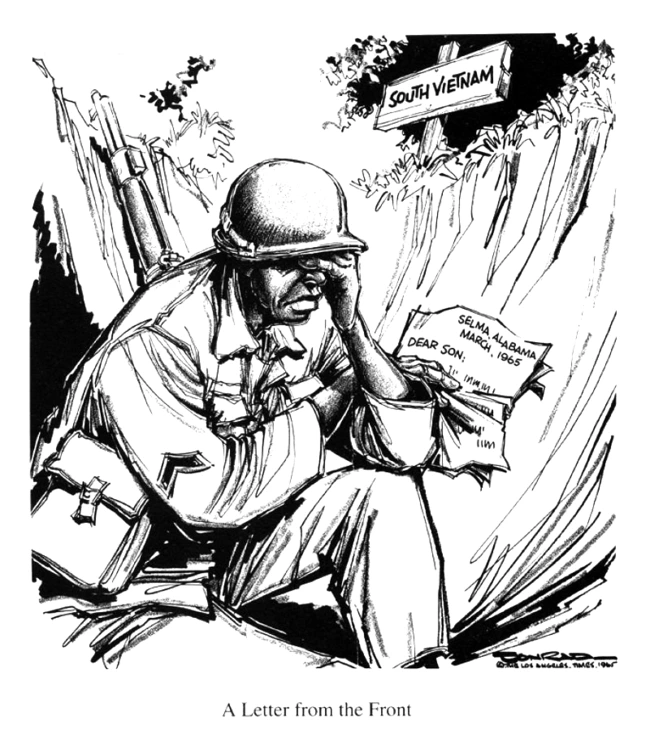
By the mid-60s, as Paul Conrad observed, there was more than one war being waged.
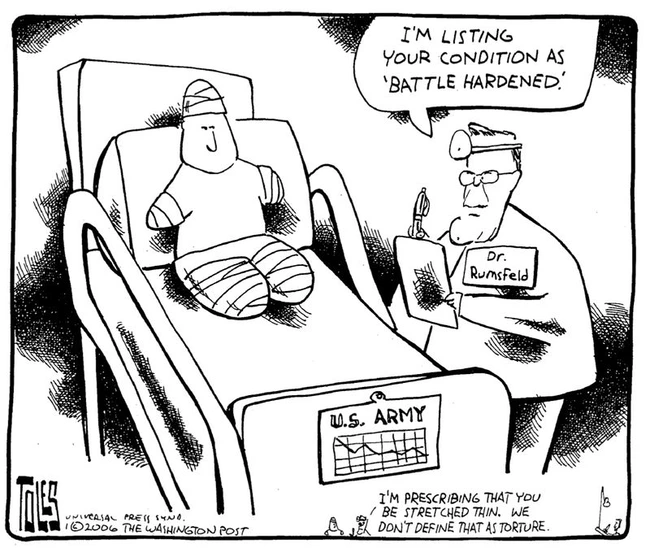
A generation — a war — after that, Tom Toles set off a fury with his critique of how Donald Rumsfeld echoed Sassoon’s “Base Details.”
The Joint Chiefs wrote a letter condemning his cartoon, but that was in the days when the Washington Post was headed by Katherine Graham. Perhaps you had to be there.
Fred Hiatt, The Post’s editorial page editor, said he doesn’t “censor Tom” and that “a cartoonist works best if he or she doesn’t feel there’s someone breathing over their shoulder. He’s an independent actor, like our columnists.” Hiatt said he makes comments on drafts of cartoons but that Toles is free to ignore them.
Well, times change, and now YouTube has ruled that this Australian ballad is too scary to repost. Or too honest. Too something. Mustn’t upset anyone.
But click on that link, and then hear its songwriter and its inspiration:
Mike Peterson has posted his "Comic Strip of the Day" column every day since 2010. His opinions are his own, but we welcome comments either agreeing or in opposition.

Comments 13
Comments are closed.